
How to Adjust HVAC Dampers for Better Airflow
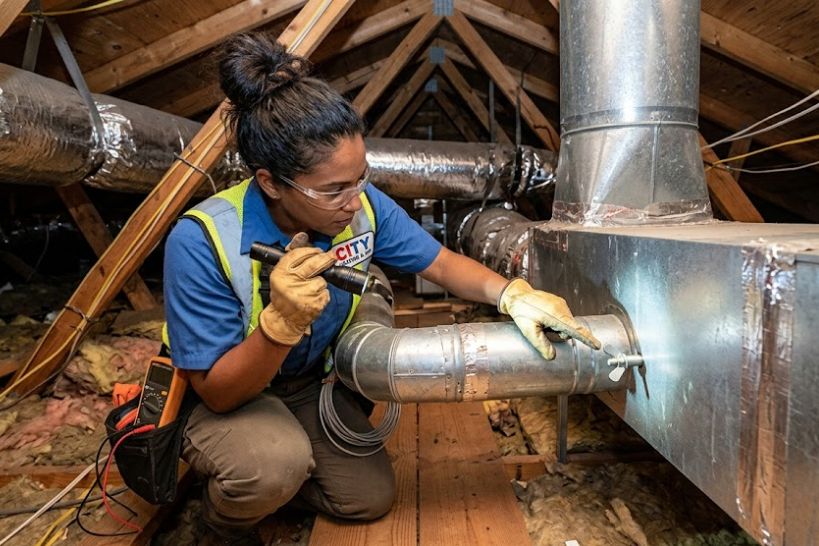
Adjusting manual balancing dampers in your ductwork helps you achieve consistent temperatures across different floors and stop over-conditioning unused rooms. Set the handle parallel to the duct to open it, perpendicular to restrict flow. Make small 15-degree increments, and never close any branch below 25% open.
This guide is for homeowners dealing with uneven heating or cooling who want a comfortable, balanced home. The task is beginner-friendly and typically takes less than an hour. Before starting, make sure you have safe access to your ducts in the attic or utility room. You will need a flashlight, a marker, smartphone notes, and a flathead screwdriver or pliers.
Always make small, incremental changes. Closing multiple dampers completely can cause system strain. If you have a zoned system or encounter stuck dampers, contact a licensed professional. If you are in the Maryland or DC area, A-C Air Care offers expert comfort balancing to keep your air conditioning system running efficiently.
Locate and Identify Your Balancing Dampers
Forcing a motorized damper can burn out the actuator motor, resulting in a costly repair. Before touching any hardware, confirm you are dealing with a manual damper, not a powered one.
Search for dampers near the HVAC unit along the main supply trunks. They are usually found on smaller branch lines within a few feet of the plenum. Look for these visual cues:
- A metal lever, wing nut, or small handle
- A shaft passing through the duct wall
- Handle orientation: parallel means open; perpendicular means closed
Warning: If the device has wiring or a plastic actuator, it is a powered zone damper. Do not attempt to move these manually to avoid damaging the control board. If no levers are present, your system requires register adjustments instead.

Open All Dampers and Registers to Create a Baseline
Set your thermostat fan to the ON position to provide steady airflow for testing. Next, fully open every manual damper in the ductwork. A damper is fully open when the handle is parallel to the duct.
Open every supply register in your home to create a 100% open baseline. This keeps your results from being skewed by existing restrictions.
Caution: Do not fully close multiple dampers at once. This creates excessive backpressure, loud whistling, and unnecessary strain on the blower motor.
Verification: You should feel steady air at most registers. If airflow is weak everywhere, stop and check your air filter or schedule a professional HVAC tune-up before making adjustments.
Map and Label Your Duct Dampers for Precision Control
Identify which damper controls each room to eliminate seasonal guesswork. Start by visually tracing every supply run from the main furnace plenum to the individual branch ducts.
- Coordinate with a partner: one person at the dampers, one checking vents by hand.
- Partially restrict a single damper (Damper A).
- Walk the house and note which registers lose airflow.
- Re-open Damper A fully before moving to the next lever.
Label each duct using a permanent marker or durable tape tags. Use specific names like “Upstairs Bedrooms” or “Living Room Side.” Take a photo of the labeled dampers and save a quick map in your phone notes for faster seasonal adjustments.
Success looks like: You can identify the specific area every damper affects without guessing. This turns your HVAC balancing into a repeatable system for future troubleshooting.
Adjusting Your Dampers for Seasonal Comfort
Balancing your airflow requires a strategic approach based on the time of year. Avoid the mistake of closing dampers completely. This creates high static pressure that chokes your blower motor and causes loud whistling. Follow these steps to adjust HVAC dampers correctly:
- Identify your seasonal goal. In summer, increase airflow to upper floors to combat rising heat by partially restricting basement dampers. In winter, reduce upstairs delivery to keep heat on the main and lower levels.
- Move levers in small increments. Adjust handles about 15 degrees at a time rather than shifting from fully open to nearly closed.
- Maintain minimum airflow. Keep every branch at least 25% open so the system breathes properly.
- Verify the results. Listen for whistling or rattling at the registers. If you hear noise, the restriction is too tight and needs to be opened slightly.
For specific hot spots in a single room, use the wall register for final micro-tuning instead of adjusting the main duct dampers.
Call (410) 205-5837 for Same-Day Service
Test and Document Your Final HVAC Damper Settings
Set your thermostat back to AUTO and allow the home to stabilize for 2 to 3 days before making further changes. This waiting period prevents overcorrecting based on temporary temperature fluctuations. To validate your results, follow this tracking method:
- Pick 3 to 5 key rooms and note comfort levels in both the morning and afternoon.
- If a room remains uneven, fine-tune the duct handle using the small increment rule.
- Once balanced, draw a line on the duct with a permanent marker to show the handle position.
- Label these marks WINTER and SUMMER, then take a photo of each damper with the label visible.
If comfort still will not balance, you may have a mechanical damper failure or a broader ductwork issue. Schedule a professional HVAC inspection to resolve deep-seated airflow problems.
Troubleshooting and How to Fix HVAC Dampers
If a damper handle is jammed, do not force it or you may bend the metal ductwork. First, check for an overtightened wing nut. Apply light penetrating lubricant to the external pivot shaft and use small back-and-forth movements to loosen the mechanism.
If the handle spins without changing airflow, the internal blade is likely disconnected from the shaft. Stop your DIY efforts and schedule professional AC repair to fix the mechanical failure.
If whistling starts, re-open the restricted damper slightly and check that registers are fully open. For persistent hot spots, check for dirty filters or duct leaks. Contact A-C Air Care for an airflow diagnosis, maintenance, or system upgrades.
Frequently Asked Questions About HVAC Dampers
How can you tell if an HVAC damper is open or closed?
Look at the position of the external handle or lever on the side of your ductwork. When the lever is parallel to the duct, the internal blade is open to allow maximum airflow. If the lever is perpendicular to the duct, the airflow is restricted. If your hardware has a wing nut, loosen it before moving the lever and tighten it afterward to lock the setting.
Is it okay to close off dampers in unused rooms to save energy?
Use partial adjustments only. Completely closing off multiple dampers or registers creates high static pressure that can damage your blower motor or cause your AC coils to freeze. If your system becomes louder or you hear a whistling sound after an adjustment, open the dampers slightly to restore proper pressure and protect your equipment.
What should I do if my ductwork does not have dampers?
You can manage basic airflow by adjusting the louvers on your wall or floor registers. Make sure your air filters are clean and that return vents are never blocked by furniture or curtains. If you still experience significant temperature imbalances, consider having a professional install manual dampers or a motorized zoning system.
Can I manually adjust dampers in a motorized zoning system?
No. Motorized dampers are controlled by a central panel and your thermostat. Attempting to force these levers by hand will likely strip the gears or burn out the actuator motor. If a specific zone is not heating or cooling correctly, the issue usually involves the control logic or a mechanical failure that requires professional service.
When should I hire an HVAC professional for air balancing?
DIY balancing is ideal for small seasonal tweaks and minor comfort issues. You should call a professional if dampers are stuck, handles spin freely without moving the internal blade, or you suspect duct leaks are wasting energy. For persistent hot or cold spots that you cannot resolve, contact A-C Air Care to schedule a professional airflow evaluation and system tune-up.
Adjusting your HVAC dampers is one of the most practical things you can do to improve home comfort without spending money on equipment. Start with a full-open baseline, map each damper to its zone, then make small seasonal adjustments. When problems go beyond what a lever can fix, A-C Air Care is ready to help.